

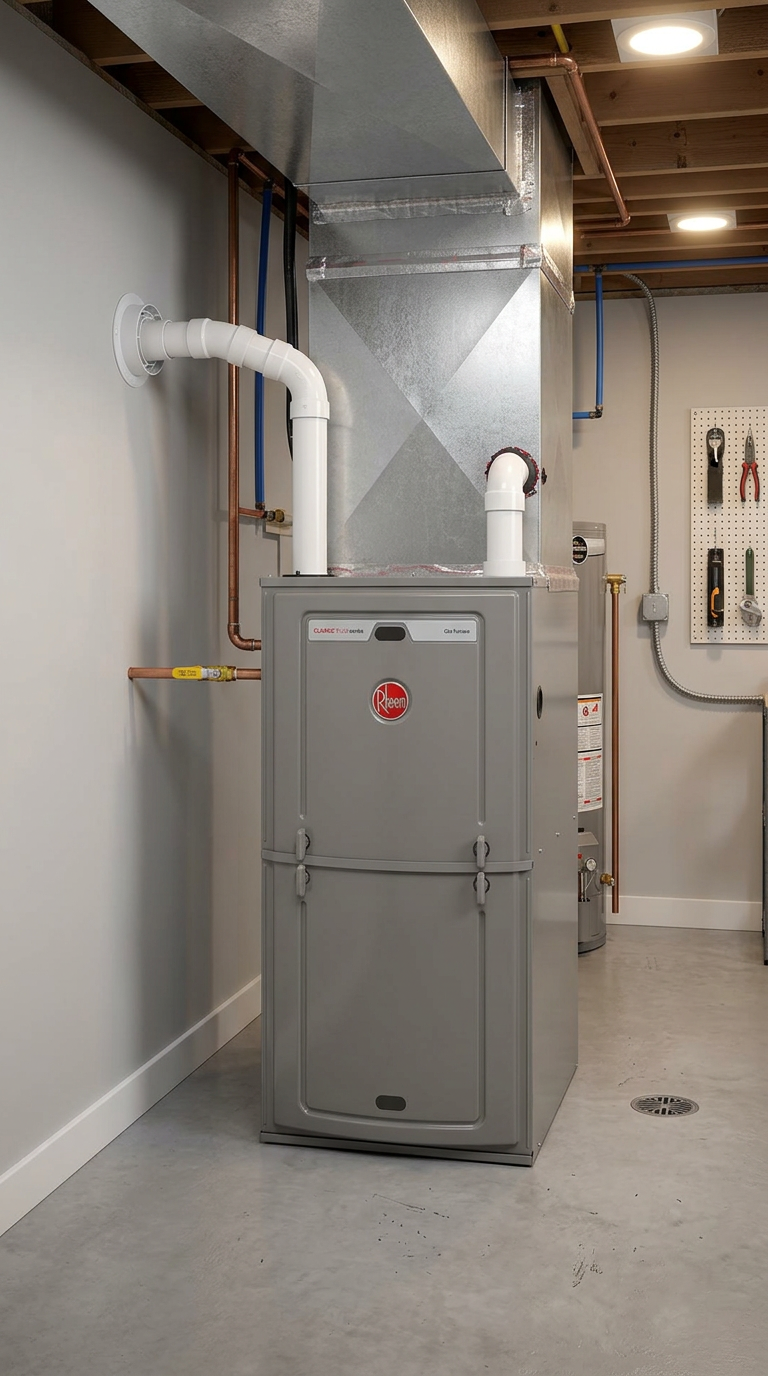
What do good furnaces have in common?
The best furnaces are efficient. They keep a home warm and comfortable. They provide steady, dependable performance year after year. And they are quiet, long-lasting and low in service frequency and cost.
Which furnaces are energy efficient?
When a furnace loses or wastes heat, it requires more energy to keep your home warm. Some furnaces lose heat through the walls of the furnace cabinet. Energy-efficient furnaces like Rheem's full line of state-of-the-art models significantly reduce this loss with a blanket of insulation that lines the inside of the cabinet walls.
When a gas furnace is not in operation, most send a steady, wasteful draft of warm household air traveling up the venting system and out the roof. Rheem products feature an induced-draft blower that works in conjunction with a hot surface ignition system to pull hot gases through the heat exchanger at a constant and controlled rate. As the burner cycles off, the draft blower stops, keeping the heating air in the system.
Pilot lights can also be wasteful. The electric ignition in Rheem furnaces eliminates the need for a constantly burning pilot. On its own this feature can give up to 6% higher efficiency, and combined with the induced-draft blower, can improve furnace efficiencies by over 20%.
Are some furnaces better than others?
Definitely. Features to look for include heat exchangers that resist corrosion, direct-drive blower units, induced draft blowers, pressure switches and an insulated blower compartment which helps minimize operating noise.
Did You Know?
One in four furnaces in homes today are more than 20 years old. Older furnaces were not built with the same energy-saving technology as today's products. Your older furnace could be costing you hundreds of dollars a year between maintenance and energy usage.